Follow Us:


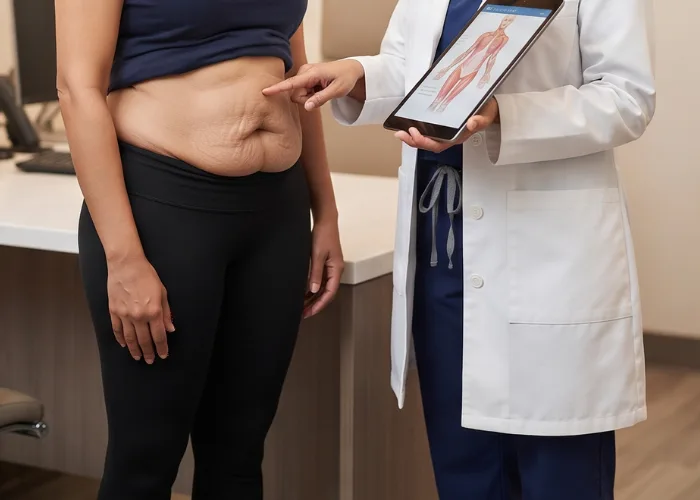
Losing a significant amount of weight can be a major health achievement. Whether you've reached your goals through lifestyle changes, a medically supervised program, or weight loss injections in Mumbai, the physical transformation can be rewarding.
But after the weight comes off, some people notice something they weren't expecting: loose or sagging skin.
The skin stretches as body weight increases. When a substantial amount of fat is lost, particularly after long-term obesity, the skin may not completely return to its previous shape. This can affect the abdomen, arms, thighs, breasts, back, and other areas.
For some people, the change is mild and improves gradually. For others, excess skin remains despite maintaining a healthy weight and exercising regularly.
This is where body contouring may be considered.
Body contouring includes a range of surgical and non-surgical treatments designed to improve the shape and appearance of areas affected by excess skin or changes in body composition.
The right option depends on how much loose skin is present, your overall health, whether your weight is stable, and what outcome you expect from treatment.
Skin contains collagen and elastin, which allow it to stretch and return toward its original shape.
When weight increases, the skin expands to accommodate the larger body size. If this stretching continues for years, collagen and elastin fibres may lose some of their elasticity.
After substantial weight loss, the underlying volume decreases, but the stretched skin may not fully contract.
Several factors influence how much loose skin develops:
Not everyone who loses weight develops significant excess skin.
Weight loss injections do not directly cause loose skin.
Loose skin is primarily a consequence of losing substantial amounts of body fat.
However, when weight is lost quickly, the skin may have less time to adapt to the changing body shape. This can make loose skin more noticeable.
For people using weight loss injections in Mumbai, maintaining adequate nutrition, protein intake, physical activity, and a medically supervised rate of weight loss can support healthier body composition throughout treatment.
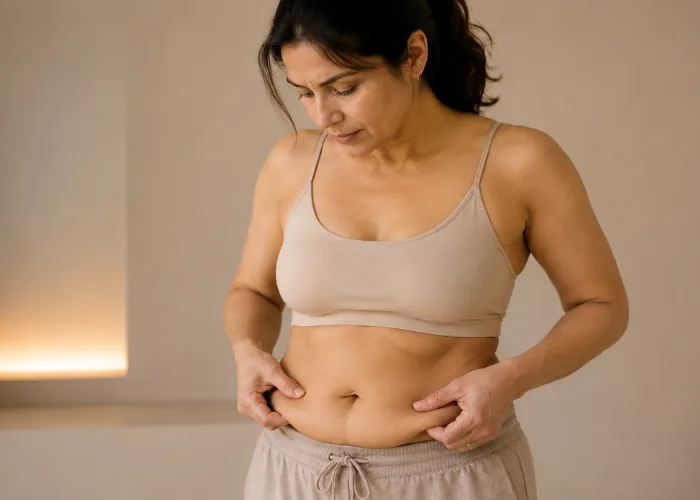
Not everyone needs body contouring after losing weight.
If the skin is mildly loose, it may gradually become less noticeable as your weight stabilizes and your body composition improves.
Treatment may be worth discussing if excess skin:
An important consideration is timing.
Body contouring is generally better considered once you are close to your target weight and have maintained a relatively stable weight for a period recommended by your doctor.
If you are still actively losing a significant amount of weight, additional weight loss could change the result.
Non-surgical treatments are often considered when loose skin is mild to moderate.
They generally aim to improve skin firmness by stimulating collagen or tightening existing tissue.
However, expectations need to be realistic.
Non-surgical treatments cannot remove large amounts of excess skin.
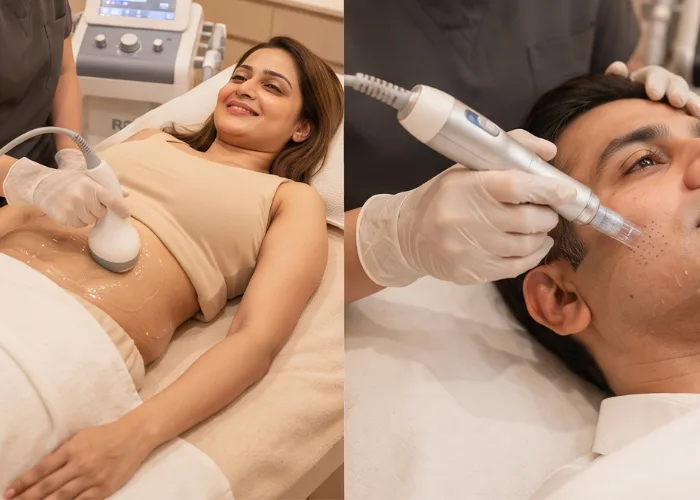
Radiofrequency treatments use controlled energy to heat tissue beneath the skin.
The treatment may stimulate collagen remodeling and gradually improve skin firmness.
It can be considered for areas with mild laxity, depending on the individual's skin condition.
Some technologies use focused ultrasound energy to target deeper tissue layers.
The aim is to stimulate collagen production and gradually improve skin tightening.
Results vary depending on:
RF microneedling combines controlled microneedling with radiofrequency energy.
It may help improve:
It is generally more appropriate for skin that has some elasticity remaining rather than large folds of excess skin.
They may be considered when:
A consultation is important because not every treatment works equally well for every type of loose skin.
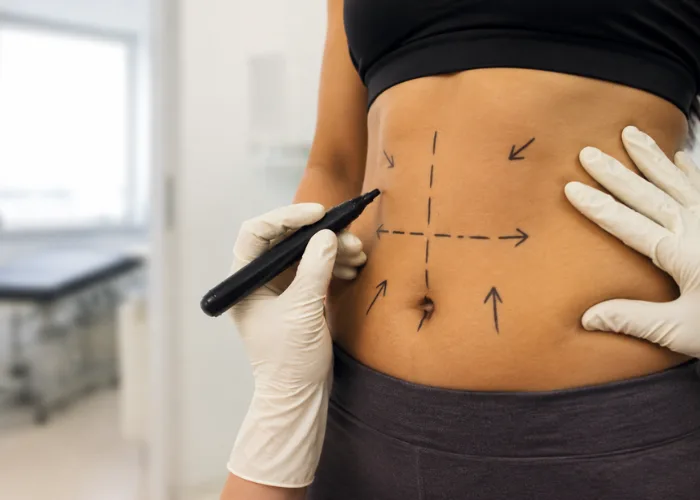
When there is a significant amount of excess skin, surgery is generally the most effective way to remove it.
Surgical body contouring doesn't simply tighten the skin—it removes excess tissue and reshapes the affected area.
Several procedures may be considered.
A tummy tuck is one of the most common procedures after significant weight loss.
It can address:
The procedure involves removing excess skin and reshaping the abdominal area.
It is particularly relevant for people who have a substantial amount of loose skin around the abdomen that does not respond to exercise.
Significant weight loss can leave excess skin along the upper arms.
An arm lift removes excess skin and reshapes the upper arm.
It may be considered when loose skin affects:
A thigh lift can address loose skin around the inner or outer thighs.
It may be considered when excess tissue causes:
After major weight loss, excess skin may extend around multiple areas of the lower body.
A lower body lift may address loose skin involving areas such as:
It is a more extensive procedure and requires careful assessment of overall health and recovery expectations.
Significant weight loss can change breast volume and cause the breasts to lose some of their previous shape.
A breast lift may help reposition and reshape the breast tissue.
Depending on the individual, other procedures may sometimes be considered alongside a lift.
The biggest difference is the amount of excess tissue that can be addressed.
| Factor | Non-Surgical Treatments | Surgical Body Contouring |
|---|---|---|
| Mild skin laxity | Often more suitable | May not be necessary |
| Significant excess skin | Limited benefit | Usually more effective |
| Skin removal | No | Yes |
| Downtime | Usually minimal | Longer recovery |
| Anaesthesia | Usually not required | Required depending on procedure |
| Results | Gradual and modest | More significant reshaping |
| Scarring | Minimal or none | Surgical scars are expected |
The "best" treatment is therefore not the one that sounds most advanced. It is the one that matches the amount and type of excess skin you have.
Exercise cannot remove excess skin.
However, strength training can improve the appearance of the body by building muscle underneath the skin.
Resistance exercises can help:
This is especially important during medical weight loss.
If you're using weight loss injections in Mumbai, combining treatment with resistance training and adequate protein can help support muscle preservation as you lose body fat.
Protein does not magically tighten excess skin, but it is an important part of healthy weight management.
Adequate protein supports:
Good sources include eggs, fish, chicken, paneer, Greek yogurt, tofu, lentils, beans, and other protein-rich foods.
Your individual protein requirements should be determined according to your health, body composition, activity level, and treatment plan.
Moisturizers can improve the hydration and appearance of the skin, but they cannot remove substantial excess skin.
Similarly, supplements marketed as "skin tightening" solutions should be approached cautiously.
If you have a nutritional deficiency, correcting it may support overall skin health. However, supplements cannot replace appropriate treatment for significant excess skin.
Timing matters.
Body contouring surgery is generally best considered after:
If you are still losing weight with weight loss injections in Mumbai, your doctor may recommend waiting until your weight has stabilized before deciding on surgery.
Don't choose a procedure solely because someone else achieved good results with it.
Your doctor should evaluate:
A person with mild abdominal laxity may benefit from a non-surgical approach, while someone with a large abdominal skin fold may require surgical removal.
Body contouring and medical weight management serve different purposes.
Weight loss treatment focuses on reducing excess body fat and improving metabolic health.
Body contouring focuses on reshaping areas where excess skin or tissue remains after weight loss.
If you're still actively losing weight, it may be better to complete the weight-loss phase first.
Once your weight becomes stable, you can discuss whether any body contouring procedure is appropriate.
Body contouring does not prevent future weight gain.
Significant weight changes after surgery can alter the results.
For this reason, maintaining healthy eating habits, regular exercise, and appropriate long-term obesity management is important even after body contouring.
For patients who have used weight loss injections in Mumbai, continued medical follow-up may be helpful in maintaining weight-loss results.
Results depend heavily on the treatment chosen.
Non-surgical treatments
These generally provide gradual and modest improvement in skin firmness. They are not designed to remove substantial excess skin.
Surgical procedures
Surgery can provide more noticeable reshaping because excess skin is physically removed.
However, surgical procedures also involve:
Your surgeon should explain the expected outcome and risks before treatment.
Loose skin after major weight loss is not a sign that your weight-loss journey has failed. In fact, it can be a visible reminder of how much weight you've successfully lost.
The right approach depends on how much loose skin you have and what you want to achieve.
For mild laxity, non-surgical skin-tightening treatments may provide an improvement. When substantial excess skin remains, surgical body contouring may offer a more effective solution.
If you're currently undergoing medical weight management, including weight loss injections in Mumbai, focus first on reaching and maintaining a healthy, stable weight. Once your weight is stable, a qualified specialist can assess your body composition and skin laxity and help determine whether you would benefit from non-surgical treatment or body contouring surgery.
Ready to take the next step after weight loss? Book a consultation with our specialists to assess your loose skin, discuss your options, and create a personalized plan for achieving a healthier and more confident body contour.
Book a consultation with our specialists to assess your loose skin, discuss your options, and create a personalized plan for achieving a healthier and more confident body contour.
Book Consultation