Follow Us:


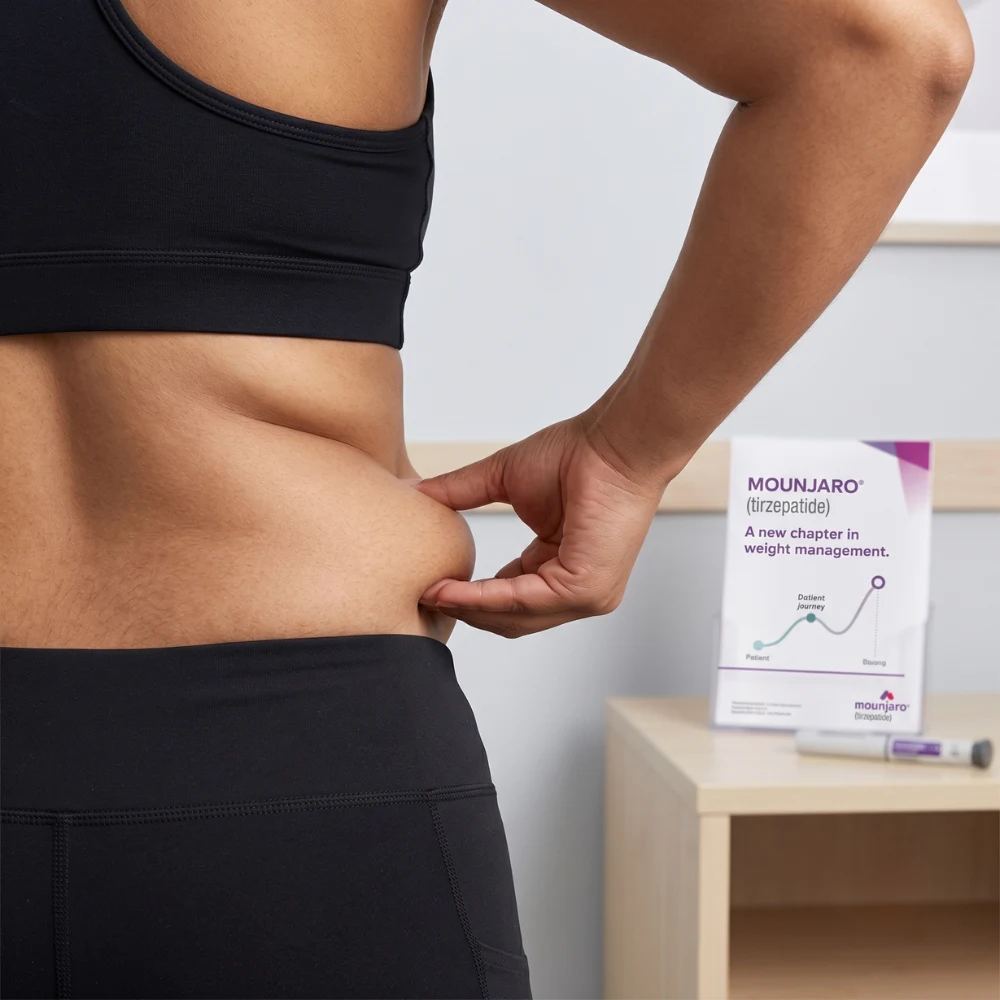
Belly fat is often one of the most frustrating areas to lose. You may notice changes in your face, arms, legs or overall body weight while your abdomen seems to change much more slowly. This can make people wonder whether their weight-loss treatment is actually working.
Mounjaro (tirzepatide) can support significant weight reduction by influencing appetite, food intake and metabolic pathways. Research has also found reductions in visceral adipose tissue, the deeper type of abdominal fat surrounding internal organs. In an MRI substudy of people with type 2 diabetes, tirzepatide reduced both visceral and abdominal subcutaneous fat, along with liver fat, over 52 weeks.
However, Mounjaro does not specifically "burn belly fat" or allow you to choose where your body loses fat first. Fat distribution is influenced by genetics, hormones, age, sex, body composition and overall weight loss.
For people considering Mounjaro injections in Mumbai or other weight loss injections in Mumbai, understanding the difference between types of abdominal fat can help set realistic expectations.
"Belly fat" can refer to more than one type of fat.
The two major categories are:
This is the fat located directly underneath the skin. It is the softer layer that you can pinch around your abdomen.
Visceral fat is stored deeper inside the abdominal cavity, around organs such as the liver, intestines and pancreas.
These two types of fat behave differently and have different metabolic implications.
Visceral fat is particularly important because excess visceral adiposity is associated with metabolic problems such as insulin resistance, type 2 diabetes and cardiovascular risk.
This is why reducing abdominal fat is not simply about having a flatter stomach. Improving the amount and distribution of body fat can also be an important part of improving metabolic health.
One of the biggest misconceptions about weight loss is that fat disappears evenly from the entire body.
It doesn't.
When you lose weight, your body draws energy from fat stores throughout the body. The amount lost from different areas depends partly on individual fat distribution.
Some people notice their face becoming slimmer first. Others see changes in their waist, hips or limbs before they notice significant abdominal changes.
Several factors influence this pattern.

Your genes play an important role in determining where your body tends to store and release fat.
Two people with similar body weights can have very different fat distributions.
Hormonal signals influence appetite, energy balance and fat storage. Sex hormones, insulin and other metabolic signals can all affect how body fat is distributed.
Body composition tends to change with age. Muscle mass may decrease and abdominal fat may become more prominent, particularly around midlife.
Someone with a higher amount of visceral or abdominal fat may experience noticeable changes as overall weight decreases, but visible changes in the stomach may not always occur immediately.
Mounjaro contains tirzepatide, a medication that activates both GIP and GLP-1 receptors.
Its effects include influencing appetite and food intake, which can contribute to weight loss when used as part of an appropriate treatment plan.
But an important distinction is necessary:
Mounjaro does not directly target only belly fat.
Instead, it contributes to overall weight and fat reduction. As total body fat decreases, abdominal fat may decrease as part of that process.
Research provides particularly interesting evidence regarding visceral fat.
In the SURPASS-3 MRI substudy, tirzepatide treatment was associated with significant reductions in visceral adipose tissue and abdominal subcutaneous adipose tissue compared with insulin degludec. The study also found a significant reduction in liver fat.
A later analysis of the same MRI study found that tirzepatide was associated with a reduction in visceral fat and liver fat and suggested a shift toward a more balanced fat-distribution pattern.
You may look in the mirror and judge your progress based on how much your stomach has reduced.
But visible abdominal size does not tell the entire story.
Similarly, some people have considerable subcutaneous abdominal fat but relatively less visceral fat.
This is why doctors may assess more than body weight when monitoring medical weight loss.
A person can have:
without immediately achieving a completely flat abdomen.

Evidence suggests that tirzepatide can reduce visceral adipose tissue as overall weight decreases.
The SURPASS-3 MRI research is particularly relevant because researchers used MRI measurements to examine abdominal fat rather than relying only on body weight or waist circumference.
This is clinically relevant because visceral fat is metabolically active and is associated with cardiometabolic risk.
However, research findings from clinical trials should not be interpreted as a guarantee that every person taking Mounjaro will lose a specific amount of belly fat.
Individual results vary.
Imagine that you have been losing weight steadily but your waist measurement has barely changed.
This can happen for several reasons.
Your body does not choose one area and remove all its fat first. Weight loss can occur across multiple regions simultaneously.
Short-term changes in hydration, sodium intake, digestion and other factors can temporarily affect abdominal appearance and body weight.
Changes in digestion can make the abdomen appear larger even when body fat is decreasing.
After substantial weight loss, stretched skin may remain around the abdomen. Removing body fat does not automatically eliminate excess skin.
Weight reduction can involve both fat mass and lean mass. In a SURMOUNT-1 body-composition substudy, tirzepatide-associated weight loss consisted predominantly of fat mass, with approximately 75% of weight lost coming from fat mass and 25% from lean mass in the studied group.
This is one reason nutrition and resistance training matter during medical weight loss.
Not necessarily.
A flatter abdomen depends on much more than total weight loss.
Factors include:
Mounjaro should therefore not be viewed as a treatment specifically designed to create a flat stomach.
Its role is broader: supporting medically appropriate weight and metabolic management.
You cannot reliably choose where your body burns fat by exercising a particular muscle group.
For example, abdominal exercises can strengthen the abdominal muscles, but doing hundreds of crunches does not specifically force the body to burn abdominal fat.
A more effective strategy is to combine:
As overall body fat decreases, abdominal fat can decrease as part of the broader process.
When people focus entirely on the weighing scale, they may overlook muscle preservation.
Weight loss can involve reductions in both fat mass and lean mass. The goal of a well-designed weight-management programme is not simply to lose as much weight as possible, but to improve body composition and health while maintaining physical function.
Strength training may help support muscle mass and strength during weight loss.
Examples include:
The appropriate programme depends on your age, fitness level, medical history and physical limitations.

Mounjaro can help reduce appetite and food intake, but medication does not replace good nutrition.
A balanced eating pattern can include:
Protein supports muscle maintenance and can help make meals more satisfying.
Examples include eggs, fish, chicken, paneer, curd, dal, beans, soy and other suitable protein sources.
Vegetables, fruits, legumes and whole grains can support dietary quality and digestive health.
Nuts, seeds, fish and other sources of unsaturated fats can be included in appropriate portions.
Whole grains, vegetables, legumes and other minimally processed carbohydrate sources can provide useful nutrients and fibre.
The goal is not to eliminate carbohydrates or fats completely. A sustainable eating pattern is generally more useful than an extremely restrictive diet.
If your overall weight is decreasing but your abdomen appears unchanged, don't immediately assume that treatment is failing.
Instead, consider tracking several measurements over time:
A doctor can also assess whether your rate of weight loss, nutrition, activity level and treatment plan are appropriate.
No.
Tirzepatide is a prescription medication, and suitability depends on the individual's health, medical history, current medicines, treatment goals and applicable indications.
Before prescribing treatment, a doctor may review factors such as:
Mounjaro should be used under medical supervision rather than purchased or used solely because someone else experienced successful weight loss with it.
If you are researching weight loss injections in Mumbai, it is worth looking beyond the promise of rapid weight loss.
A medically supervised programme should consider the whole person.
Depending on your needs, this may involve:
The objective should be sustainable improvement in health and body composition rather than simply reducing the number on the scale.
Reality: Tirzepatide promotes overall weight and fat reduction; it does not selectively target abdominal fat.
Reality: Weight loss and changes in abdominal fat do not always occur at exactly the same pace.
Reality: Core exercises strengthen abdominal muscles but do not selectively burn the fat covering them.
Reality: Fat distribution varies considerably between individuals, and visible abdominal changes may take time.
Reality: Medication changes should only be made according to an appropriate medical treatment plan. Increasing treatment without professional guidance can increase the risk of adverse effects.
Belly fat can be one of the last visible signs of weight change, but that does not necessarily mean that nothing is happening beneath the surface. Mounjaro (tirzepatide) can support overall weight reduction and research has demonstrated reductions in visceral and abdominal fat during treatment.
The most effective approach is to look beyond spot reduction and focus on overall fat loss, muscle preservation, nutrition, physical activity and metabolic health. If you are considering Mounjaro injections in Mumbai or exploring weight loss injections in Mumbai, speak with a qualified weight-management doctor to understand whether tirzepatide is appropriate for you and how it can be incorporated into a personalised, medically supervised weight-management plan.
Book a consultation today to understand your metabolic health, discuss your weight-management options, and find out whether Mounjaro could be an appropriate part of your personalized treatment plan.
Book Consultation