Follow Us:



Obesity is increasingly understood as a chronic, complex health condition rather than simply a matter of eating too much or exercising too little. For many people, losing weight and keeping it off can be difficult even when they make consistent lifestyle changes. This has created growing interest in medicines that target the biological pathways involved in appetite, blood sugar regulation and body weight.
One of the treatments attracting significant attention is Mounjaro, which contains tirzepatide. Tirzepatide acts on two hormone pathways—GIP and GLP-1—and has demonstrated substantial weight reduction in clinical trials involving people with obesity or overweight and related health conditions.
For people researching weight loss injections in Mumbai, Mounjaro represents an important development in medical weight management. However, it is not a replacement for nutrition, physical activity or medical supervision. Its role is better understood as one component of a comprehensive obesity-treatment plan.
Traditional weight-loss advice often focuses on reducing calories and increasing physical activity.
These remain important, but they do not fully explain why some people struggle to lose weight or maintain weight loss.
Obesity can involve multiple biological and environmental factors, including:
After weight loss, biological adaptations can also increase hunger and make maintaining the reduced weight difficult.
This is one reason modern obesity treatment increasingly combines lifestyle intervention with medical therapies when appropriate.
Mounjaro contains tirzepatide, a medication that activates both GIP and GLP-1 receptors.
These hormones are involved in several processes related to metabolism and appetite.
Tirzepatide can influence:
The combined action on GIP and GLP-1 is one of the features that distinguishes tirzepatide from medications that act only on the GLP-1 pathway.
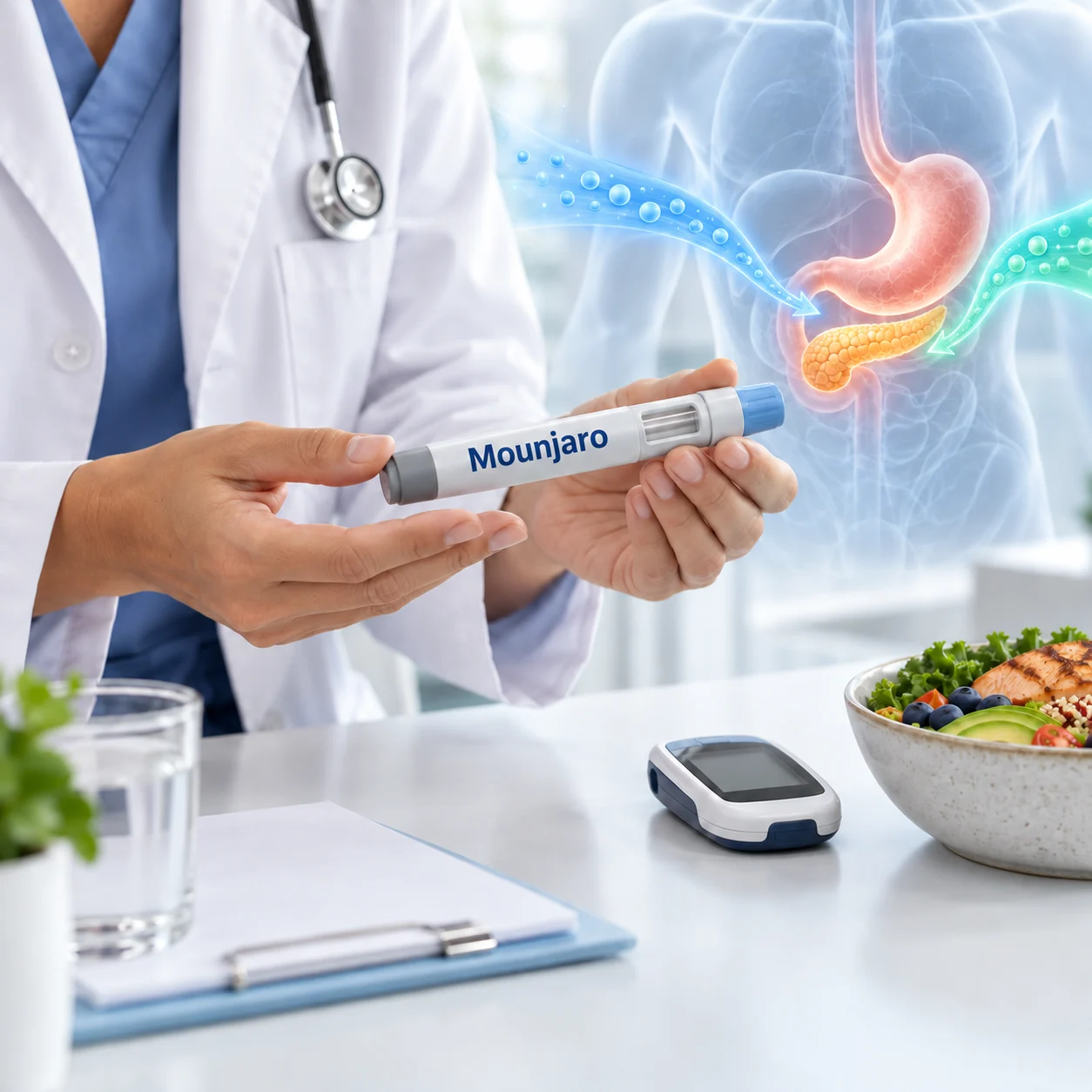
One of the main effects relevant to weight management is reduced energy intake.
When appetite decreases and fullness increases, consuming fewer calories may become easier.
Clinical research has shown substantial weight reduction with tirzepatide in adults with obesity or overweight when used alongside lifestyle intervention.
In the SURMOUNT-1 trial, adults with obesity or overweight without diabetes who received tirzepatide experienced significantly greater average weight loss than those receiving placebo over 72 weeks. The amount of weight reduction varied according to the dose studied.
This does not mean every patient will achieve the same result.
Individual response can depend on starting weight, health conditions, adherence, lifestyle factors and treatment duration.
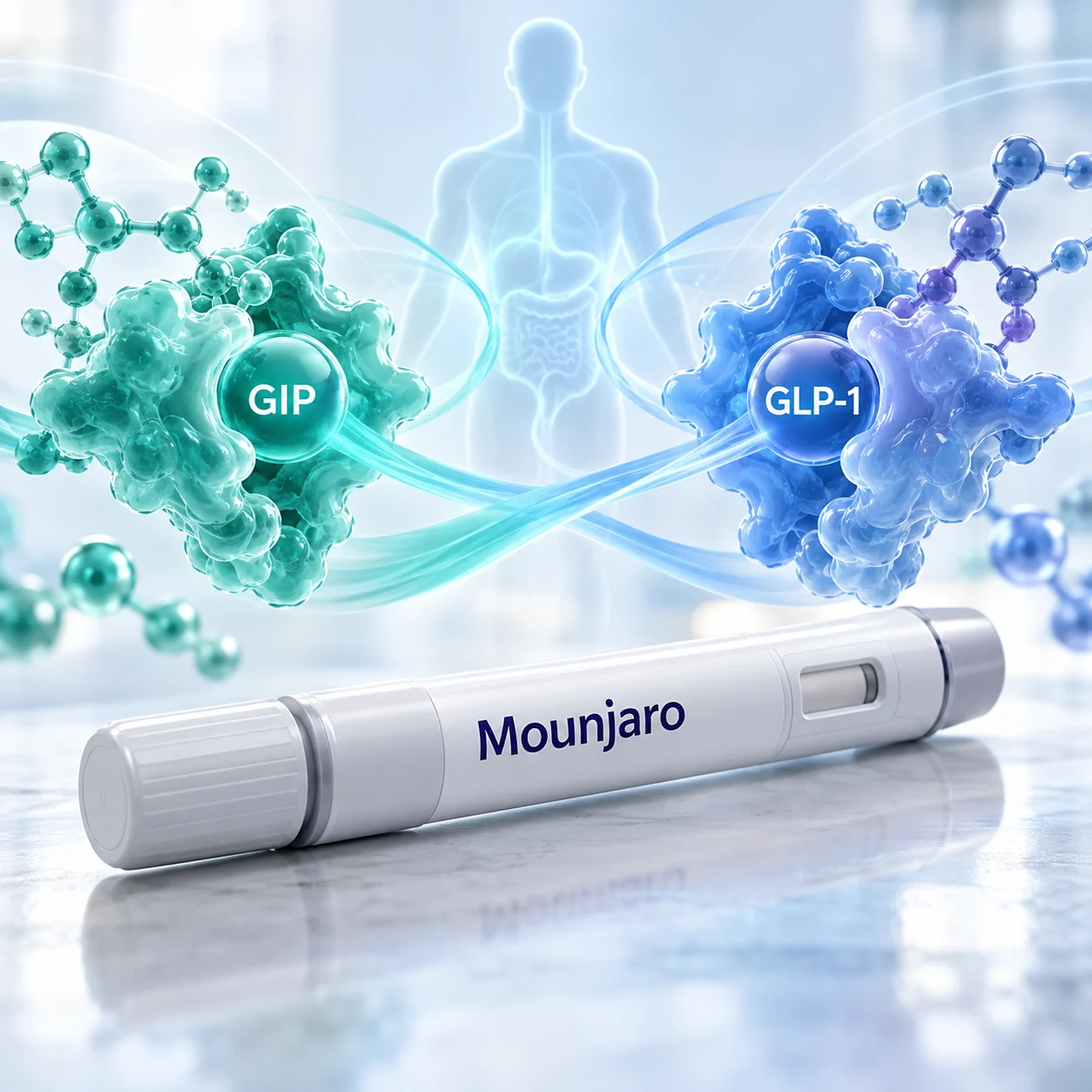
Many earlier injectable obesity medicines primarily targeted the GLP-1 pathway.
Tirzepatide is different because it activates both:
GIP — glucose-dependent insulinotropic polypeptide
and
GLP-1 — glucagon-like peptide-1
Both pathways are involved in metabolic regulation.
The exact contribution of each pathway to tirzepatide's clinical effects is complex, but dual receptor activity is considered an important part of its pharmacological profile.
This has made tirzepatide one of the most closely studied newer medicines in obesity management.
Weight management becomes particularly difficult when persistent hunger makes calorie restriction uncomfortable.
Tirzepatide can influence appetite and food intake, potentially making a structured eating plan easier to follow.
This can be particularly relevant for people who have repeatedly lost weight and regained it despite trying conventional approaches.
However, the goal is not to eliminate hunger completely.
A successful treatment plan should still provide adequate nutrition, protein, fibre and essential nutrients.
Tirzepatide was initially developed as a treatment for type 2 diabetes, where it improves glycaemic control.
It increases glucose-dependent insulin secretion and reduces glucagon secretion, helping regulate blood glucose levels.
The metabolic effects are particularly relevant for people who have obesity alongside:
However, treatment decisions should be based on an individual's medical profile rather than weight alone.
The amount of weight lost varies considerably between individuals.
In SURMOUNT-1, average percentage weight reductions at 72 weeks were substantial and dose-dependent, with the highest studied dose producing an average reduction of around 21% from baseline. Some participants lost considerably more, while others lost less.
It is important not to interpret trial averages as a guarantee.
Your outcome may differ because of:
Calling Mounjaro simply a weight-loss injection can make its role seem narrower than it actually is.
Obesity can increase the risk of several health conditions, including:
Reducing excess body weight can potentially improve several of these risk factors.
This is why modern obesity treatment increasingly focuses on improving metabolic health, not simply achieving a lower number on the weighing scale.
Not all body fat carries the same metabolic risk.
Visceral fat is stored around internal abdominal organs and is associated with metabolic complications.
Body-composition research involving tirzepatide has demonstrated reductions in body fat, including visceral fat, alongside substantial weight loss.
This is one reason waist circumference and metabolic markers can be useful alongside body weight when monitoring treatment.
However, Mounjaro should not be viewed as a spot-reduction treatment for belly fat.
Overall fat loss varies from person to person.

Weight loss involves changes in both fat mass and lean mass.
That makes muscle preservation an important part of obesity treatment.
During treatment with weight loss injections in Mumbai, patients should not focus only on eating less. Adequate protein and resistance training can help support lean muscle during weight reduction.
A comprehensive plan may include:
The goal is healthier weight reduction rather than simply achieving the fastest possible loss.
No.
The decision to use tirzepatide depends on individual health status, treatment goals and medical history.
A doctor may review:
Not everyone who wants to lose a few kilograms needs prescription medication.
The objective is to identify patients who may genuinely benefit from medical treatment.
A medical consultation should go beyond calculating BMI.
Your doctor may want to understand:
Have you previously lost weight and regained it? Have structured diet and exercise programmes been difficult to maintain?
Blood glucose, HbA1c, blood pressure and lipid levels may provide a clearer picture of your overall metabolic risk.
Some medicines can affect body weight or blood glucose and may influence the treatment plan.

Tirzepatide can cause gastrointestinal side effects, particularly during treatment initiation or dose escalation.
Certain thyroid cancer histories are particularly important when considering incretin-based medicines.
The aim should be sustainable weight management rather than a short-term crash diet.
Like other medicines, tirzepatide can cause side effects.
Common gastrointestinal effects include:
These effects may be more noticeable when treatment is started or the dose is increased.
Serious adverse effects are less common but can occur, which is why medical supervision is important.
Patients should discuss severe or persistent symptoms with their treating doctor.
Weight-loss medication is not appropriate during pregnancy.
If you are pregnant, planning pregnancy or breastfeeding, discuss this with your doctor before starting or continuing treatment.
Family-planning considerations should form part of the consultation rather than being addressed only after treatment begins.
No.
Medication can influence biological drivers of appetite and metabolism, but lifestyle remains an important part of treatment.
Mounjaro may make healthy changes easier to maintain by reducing appetite and cravings, but it does not eliminate the need for wholesome nutrition and consistent activity.

A practical obesity-management programme may include:
Nutrition:
Prioritise protein, vegetables, fibre and nutrient-dense foods.
Strength training:
Support muscle preservation during weight loss.
Cardiovascular activity:
Improve fitness and support metabolic health.
Sleep:
Aim for consistent, restorative sleep.
Behavioural support:
Address emotional eating, stress and habits that affect food intake.
Mounjaro may make some of these changes easier to maintain by reducing appetite, but it does not eliminate the need for healthy habits.
Obesity is a chronic condition, so treatment should not necessarily be viewed as a short-term course.
Clinical research with tirzepatide has shown that people who discontinue treatment can regain a meaningful amount of lost weight, while those who continue treatment maintain greater weight reduction.
This highlights an important point:
Weight maintenance needs a plan.
If treatment is stopped, nutrition, exercise, behavioural strategies and ongoing medical follow-up become particularly important.
Stopping or restarting medication should always be discussed with your doctor.

The biggest change may not be the injection itself.
It is the shift in how obesity is treated.
Instead of viewing obesity purely as a lifestyle problem, modern medicine increasingly recognises the biological mechanisms that influence appetite, metabolism and weight regulation.
This creates an opportunity for more personalised treatment.
For some patients, this may mean:
The future of obesity care is likely to be increasingly individualised.
If you are searching for weight loss injections in Mumbai, it is important to look beyond the popularity of a particular medicine.
A responsible treatment plan should begin with an assessment of your:
Mounjaro may be appropriate for some patients, while another approach may be better for others.
The right medication is not necessarily the one that is trending online. It is the one that fits your medical needs and can be safely incorporated into a sustainable treatment plan.
Mounjaro has attracted considerable attention because tirzepatide combines GIP and GLP-1 receptor activity and has demonstrated substantial weight-loss effects in clinical research. Its potential to influence appetite, food intake, blood glucose regulation and body composition represents an important development in the treatment of obesity.
But the future of obesity care is not simply about finding a stronger injection.
It is about treating obesity as a chronic health condition with a personalised strategy that addresses weight, metabolic health, nutrition, physical activity and long-term maintenance.
If you are considering weight loss injections in Mumbai or want to know whether Mounjaro in Mumbai may be appropriate for your health and weight-management goals, speak with a qualified medical professional before starting treatment.
At MOH Clinics, your medical history, metabolic health, weight-loss goals and lifestyle can be assessed to develop an individualised approach to obesity management. Book a consultation to understand your treatment options and whether medically supervised weight management is right for you.
Speak with our medical specialists at MOH Clinics in Mumbai for a personalized evaluation, expert guidance on GLP-1 and dual GIP/GLP-1 therapies, customized nutrition planning, and dedicated ongoing care.
Book Consultation