Follow Us:



Not all body fat affects health in the same way.
While the fat that sits just beneath the skin may be noticeable around the abdomen, thighs, or arms, visceral fat is hidden deeper inside the abdomen, surrounding organs such as the liver, pancreas, and intestines.
This type of fat is particularly important from a health perspective because higher levels of visceral fat are associated with insulin resistance, type 2 diabetes, cardiovascular disease, and other metabolic problems.
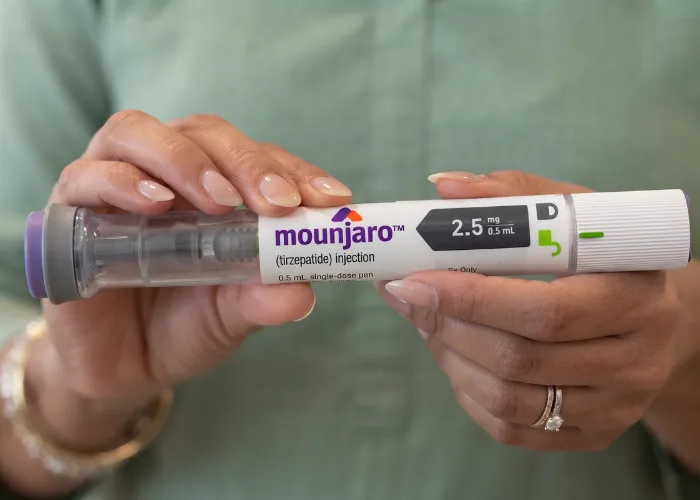
With the growing use of medications such as Mounjaro (tirzepatide) for obesity and metabolic health, many people are asking whether weight loss with Mounjaro can specifically reduce visceral fat.
The answer is encouraging: research suggests that tirzepatide-associated weight loss can substantially reduce abdominal and visceral fat. However, Mounjaro does not selectively "burn" visceral fat. Rather, its overall effects on appetite, food intake, body weight, and metabolism can lead to reductions in visceral fat as part of broader fat loss.
If you're considering Mounjaro in Mumbai, understanding the difference between visceral and subcutaneous fat can help you better understand what healthy weight loss actually means.
Visceral fat is fat stored inside the abdominal cavity around internal organs.
It is different from subcutaneous fat, which is located directly beneath the skin.
You can think of them as two different compartments:
Subcutaneous fat: The fat you can pinch or see.
Visceral fat: The deeper abdominal fat surrounding internal organs.
A person can have a relatively normal-looking body shape while still carrying an unhealthy amount of visceral fat.
This is one reason body weight alone doesn't always provide a complete picture of metabolic health.
Visceral fat is metabolically active and can release inflammatory substances that affect the body's normal metabolic processes.
Higher visceral fat levels are associated with an increased risk of:
Reducing visceral fat can therefore be an important part of improving metabolic health—not simply improving appearance.
Mounjaro contains tirzepatide, a medication that activates both GIP and GLP-1 receptors.
These hormones play important roles in:
By reducing appetite and increasing feelings of fullness, tirzepatide can help people consume fewer calories and achieve significant weight loss when used appropriately.
The resulting reduction in body weight can include substantial reductions in abdominal and visceral fat.
This distinction is important.
Mounjaro is not a spot-reduction treatment.
You cannot tell the medication to remove fat specifically from your stomach.
Instead, weight loss occurs throughout the body according to individual biology.
However, clinical research has found that tirzepatide can produce meaningful reductions in visceral adipose tissue and abdominal fat.
This means that as overall body weight decreases, the amount of metabolically active fat around the organs can also decrease.
Studies using imaging methods such as MRI and CT have examined changes in abdominal fat during tirzepatide treatment.
Research has generally shown reductions in:
Importantly, reductions in visceral fat can occur alongside improvements in several metabolic markers.
This is one reason medications such as tirzepatide are increasingly considered part of comprehensive obesity management rather than simply cosmetic weight-loss treatments.

Your waist measurement can provide a useful, although imperfect, indication of changes in abdominal fat.
As visceral and abdominal fat decrease, many patients experience a reduction in waist circumference.
Tracking your waist alongside body weight can therefore provide additional information about how your body composition is changing.
However, waist circumference alone cannot tell you exactly how much visceral fat you have.
Yes.
Visceral fat distribution varies significantly between individuals.
Some people may carry a relatively high proportion of abdominal fat despite having a BMI that isn't particularly high.
This is why doctors may consider several factors when evaluating metabolic health, including:
A comprehensive assessment provides a better picture than weight alone.
You cannot reliably determine visceral fat levels simply by looking in the mirror.
Your doctor may monitor several indicators.
A decreasing waist measurement can indicate a reduction in abdominal fat.
Some technologies estimate visceral fat levels, although accuracy varies.
CT and MRI can directly assess visceral adipose tissue but are generally used for clinical reasons rather than routine weight-loss monitoring.
Improvement in:
may indicate improved metabolic health, although these measures don't directly measure visceral fat.

Generally, reductions in overall body weight are accompanied by reductions in visceral fat.
However, the amount and distribution of fat loss vary between individuals.
This is why maintaining muscle while reducing excess fat is an important goal of medical weight management.
A successful treatment plan should focus on improving body composition and metabolic health, rather than simply achieving the lowest possible number on the scale.
Medication is only one part of the equation.
Adequate protein can help preserve lean muscle during weight loss.
Good options include:
Your ideal protein intake should be individualized according to your health and activity level.
Resistance exercise helps maintain muscle while you lose body fat.
Consider activities such as:
Strength training two to three times per week can be a useful component of a medically supervised weight-loss program.
Walking, cycling, swimming, and other aerobic activities can support overall calorie expenditure and cardiovascular health.
You don't need to exercise excessively. Consistency is more important.
A diet dominated by:
can make weight management more difficult. Instead, prioritize:
Some lean mass can be lost during any substantial weight-loss process.
This doesn't mean Mounjaro is "eating muscle."
Rather, when the body loses weight, the reduction can include both fat mass and lean mass.
You can support muscle preservation by:
Preserving muscle is important for strength, mobility, and long-term weight maintenance.
Mounjaro may be considered as part of medical weight management for appropriate patients with obesity or overweight and relevant health concerns.
Your doctor will consider factors such as:
Mounjaro is not appropriate for everyone, and it should only be used according to medical advice.
Reducing visceral fat is about more than taking an injection.
A comprehensive obesity-management program can include:
This approach helps ensure that weight loss is focused on improving health rather than simply reducing scale weight.
If you're searching for Mounjaro in Mumbai, don't choose a treatment provider based only on medication availability or price.
Look for a medically supervised program that provides:
The medication should be part of a broader treatment strategy.
Visceral fat is more than a cosmetic concern. Because it surrounds internal organs and is closely associated with metabolic problems, reducing excess visceral fat can be an important part of improving overall health.
Research suggests that Mounjaro (tirzepatide) can significantly reduce visceral and abdominal fat as people lose weight, although it does not selectively target belly fat.
The best results are achieved when treatment is combined with:
If you're considering Mounjaro in Mumbai, speak with a qualified obesity specialist to determine whether tirzepatide is appropriate for your health profile and to develop a personalized plan focused on sustainable fat loss and better metabolic health.
Ready to take control of your metabolic health? Book a consultation with our specialists to find out whether Mounjaro could be an appropriate part of your personalized weight-management plan.
Book a consultation with our specialists to find out whether Mounjaro could be an appropriate part of your personalized weight-management plan.
Book Consultation