Follow Us:



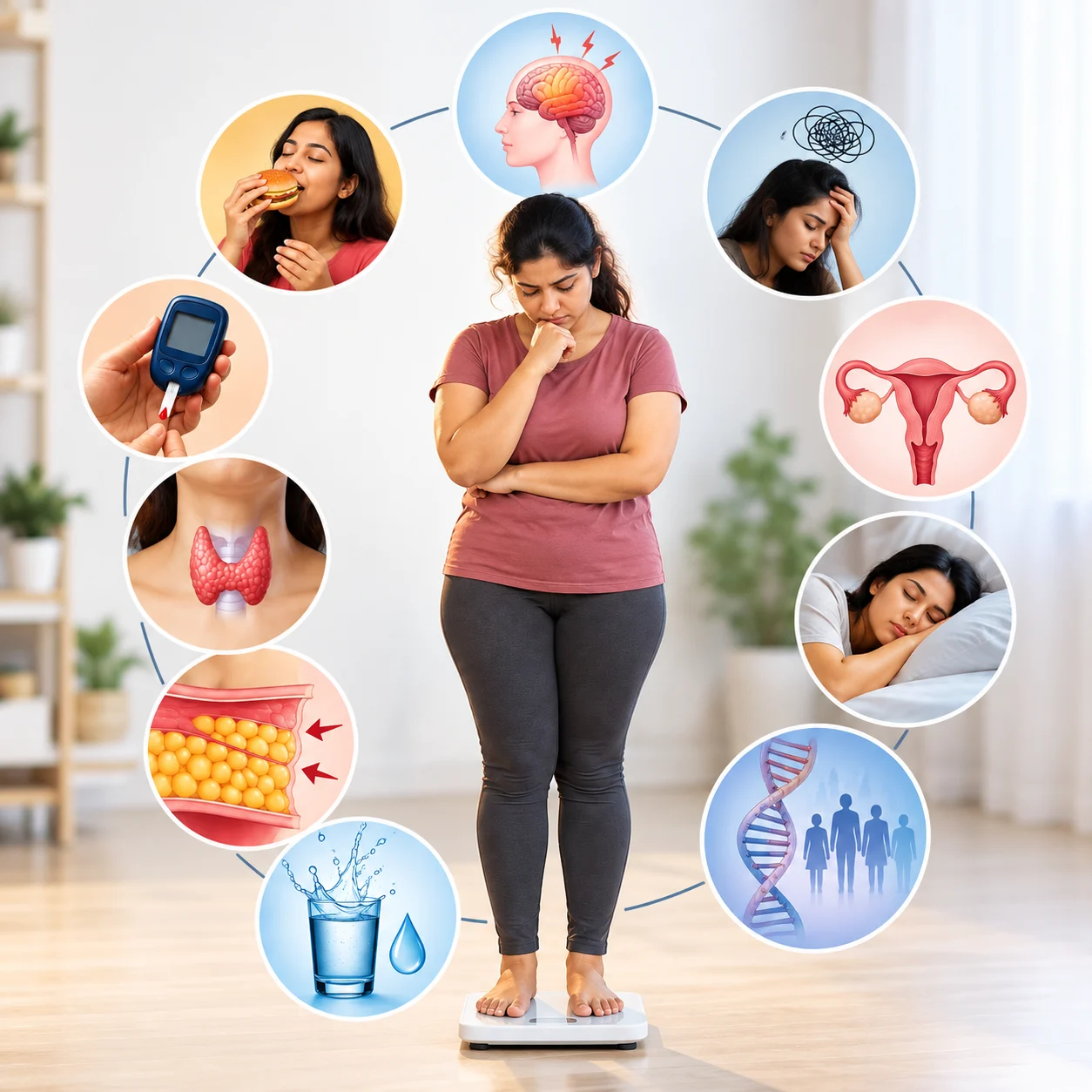
Weight gain is not always simply the result of eating more or exercising less. Hormonal changes can influence appetite, metabolism, insulin sensitivity, fluid balance and where the body stores fat. This is why some people find it particularly difficult to lose weight despite making consistent lifestyle changes.
This also raises an important question: Can Ozempic help with hormonal weight gain?
Ozempic contains semaglutide, a GLP-1 receptor agonist that influences appetite and blood glucose regulation. It may support weight reduction in appropriately selected patients, but it does not directly “balance hormones” or treat every hormonal condition associated with weight gain.
For people considering weight loss injections in Mumbai, understanding the difference between treating weight gain and treating its underlying cause is important. If a hormonal disorder is contributing to weight gain, it may need to be investigated and managed alongside any weight-management treatment.
“Hormonal weight gain” is a broad term rather than a single medical diagnosis.
Hormones influence many processes that affect body weight, including:
Changes in these systems can sometimes make weight management more difficult.
However, not every unexplained increase in weight is caused by a hormone problem.
Weight can also be affected by sleep, medications, stress, diet, activity levels, genetics, age and changes in body composition.
Several endocrine or hormonal conditions can be associated with weight changes.
An underactive thyroid can slow several body processes and may be associated with weight gain, fatigue, cold intolerance and other symptoms.
However, not all weight gain in someone with thyroid disease is caused by thyroid hormone levels.
PCOS can be associated with insulin resistance, changes in reproductive hormones and difficulty with weight management.
Women with PCOS may experience weight gain alongside symptoms such as irregular periods, acne or excess facial/body hair.
Insulin helps regulate blood glucose. Reduced insulin sensitivity can be associated with higher insulin levels and metabolic changes that make weight management more difficult.
Insulin resistance can occur alongside obesity, PCOS and prediabetes.
Changes in oestrogen and other hormones during the menopausal transition can affect body composition, appetite, sleep and fat distribution.
Many women notice an increase in abdominal fat during this stage of life.
Cushing's syndrome involves prolonged exposure to excessive cortisol and can cause weight gain, particularly around the trunk, along with other characteristic symptoms.
It is relatively uncommon and requires medical evaluation.
Not directly.
Ozempic contains semaglutide, which mimics the action of GLP-1, a hormone involved in appetite regulation and glucose metabolism.
It can:
But it does not directly correct conditions such as hypothyroidism, PCOS or menopause-related hormonal changes.
This distinction is important.
If an underlying endocrine condition is contributing to weight gain, that condition should be assessed and treated appropriately.
Semaglutide affects pathways involved in appetite and food intake.
Research has found that semaglutide can reduce hunger, increase fullness and improve control over eating, which can result in lower energy intake.
This can make it easier for some patients to maintain the calorie deficit required for weight reduction.
The medication does not simply “burn hormonal fat.”
Instead, it influences biological signals involved in appetite and metabolism.
Insulin resistance is one area where the relationship becomes more interesting.
Obesity and insulin resistance often occur together, and weight reduction can improve insulin sensitivity.
Semaglutide can improve glycaemic control in people with type 2 diabetes and can support weight reduction.
However, it is important not to assume that every person with insulin resistance needs Ozempic.
Treatment should depend on factors such as:
A doctor may recommend lifestyle changes, treatment of an underlying condition, medication or a combination approach.

Weight management can be particularly challenging for some women with PCOS.
Insulin resistance, appetite, reproductive hormones and body composition can all interact.
Weight reduction itself may improve some metabolic aspects associated with PCOS.
GLP-1 receptor agonists have been studied in women with PCOS, particularly in relation to weight and metabolic outcomes. However, treatment should be individualised, and Ozempic should not be presented as a universal treatment for PCOS.
If you have PCOS and are considering weight loss injections in Mumbai, your doctor may assess your menstrual history, metabolic health, medications and reproductive plans before deciding whether a GLP-1-based treatment is appropriate.
Menopause can bring changes in body composition, sleep, appetite and fat distribution.
Lower oestrogen levels during the menopausal transition can contribute to a shift toward greater central fat accumulation, while ageing can also reduce muscle mass and energy expenditure.
Ozempic does not replace menopause management.
However, in an appropriate patient who meets the medical criteria for weight-management treatment, semaglutide may be considered as part of an overall strategy for managing excess body weight.
The treatment decision should be based on the patient's health profile rather than menopause alone.
If thyroid function is abnormal, treating the thyroid condition is an important part of management.
Symptoms that may warrant thyroid evaluation can include:
A doctor may order thyroid function tests such as TSH and, where appropriate, free T4.
If hypothyroidism is confirmed, thyroid treatment should be managed separately.
Taking a weight-loss medication without addressing an underlying thyroid disorder may not be the best approach.
No.
Cortisol is an important hormone involved in stress regulation, metabolism and many other body functions.
Ozempic is not a cortisol-balancing medication.
If someone has symptoms suggesting an abnormal cortisol state, they should be medically evaluated rather than assuming that weight gain is simply due to “high cortisol.”
Common stress and sleep problems can also influence appetite and eating behaviour without representing a true cortisol disorder.
People with hormonal or metabolic conditions may notice that weight gain is accompanied by other changes.
For example:
PCOS: irregular periods, acne, excess hair growth or fertility concerns.
Hypothyroidism: fatigue, cold intolerance, constipation and dry skin.
Menopause: hot flashes, sleep disruption, changes in menstrual cycles and increased abdominal fat.
Cushing's syndrome: central weight gain, easy bruising, muscle weakness and other characteristic changes.
These symptoms do not prove that hormones are responsible for weight gain, but they can provide clues that further evaluation may be appropriate.

Sometimes, but it depends on the condition and your overall medical history.
Your doctor may review:
This is why obtaining weight loss injections in Mumbai without medical assessment is not recommended.
A medication that is appropriate for one person may not be suitable for another.
One of the most important principles in weight management is understanding why weight has increased.
For example, if someone has:
simply focusing on the scale may miss the bigger picture.
A comprehensive assessment can identify contributing factors and determine whether medical weight management should be part of the treatment plan.
Testing is not identical for everyone.
Depending on symptoms and medical history, a doctor may consider:
For someone with symptoms suggestive of PCOS, menopause-related changes or another endocrine condition, additional evaluation may be appropriate.
The goal is not to order every possible hormone test.
Testing should be guided by symptoms, history and clinical assessment.
Semaglutide acts on the GLP-1 pathway and affects glucose regulation and appetite.
That is different from directly replacing or correcting reproductive or thyroid hormones.
Its metabolic effects can indirectly change some health markers as body weight and glucose control improve, but this should not be confused with treating an endocrine disorder.
If you are gaining weight without an obvious explanation, start with an assessment rather than immediately looking for a weight-loss injection.
Your doctor may review:
Changes in appetite, portion sizes, cravings and meal timing can provide useful information.
Changes in daily movement or exercise can affect energy expenditure.
Poor sleep can influence hunger, cravings and weight regulation.
Some medications can contribute to weight gain.
If symptoms suggest an endocrine issue, appropriate testing may be recommended.
Blood glucose, cholesterol and other markers can help assess overall metabolic risk.
If you are already using semaglutide and continue gaining weight or are not seeing the expected progress, do not increase the dose on your own.
Your doctor may assess:
A plateau does not automatically mean that the treatment has failed.
This requires an important distinction.
Ozempic contains semaglutide, but its approved indications vary by product and jurisdiction.
In the current U.S. prescribing information, Ozempic is indicated for specific uses in adults with type 2 diabetes, including glycaemic control and certain cardiovascular and kidney risk-reduction benefits. Semaglutide products specifically approved for chronic weight management have different labelling.
Therefore, patients should not assume that every semaglutide product is interchangeable or approved for exactly the same purpose.
If you are searching for Ozempic in Mumbai, discuss the appropriate product and indication with a qualified doctor.
Semaglutide is a prescription medication and is not appropriate for everyone.
The current Ozempic prescribing information includes warnings relating to conditions such as pancreatitis, gallbladder disease, severe gastrointestinal reactions, kidney injury associated with volume depletion, diabetic retinopathy complications and hypersensitivity reactions. It is contraindicated in people with a personal or family history of medullary thyroid carcinoma or Multiple Endocrine Neoplasia syndrome type 2.
Common gastrointestinal side effects include nausea, vomiting, diarrhoea, abdominal pain and constipation.
This is why treatment should be prescribed and monitored by an appropriate medical professional.
Hormonal and metabolic factors can influence weight gain, but not every increase in weight is caused by a hormone imbalance. Conditions such as hypothyroidism, PCOS, insulin resistance and menopause can affect weight management, but each requires a different approach.
Ozempic contains semaglutide and can influence appetite, food intake and glucose regulation. It may support weight reduction in appropriately selected patients, but it does not directly correct thyroid, reproductive or cortisol-related hormone abnormalities.
If you are considering weight loss injections in Mumbai or searching for Ozempic in Mumbai, the first step should be understanding what is contributing to your weight gain and whether semaglutide-based treatment is medically appropriate.
At MOH Clinics, a personalised assessment can consider your weight history, metabolic health, lifestyle, medical conditions and treatment goals before recommending an appropriate weight-management strategy.
Book a consultation at MOH Clinics to understand the possible causes of your weight gain and explore medically supervised treatment options.
Speak with our medical specialists at MOH Clinics in Mumbai for a personalized evaluation, expert guidance on GLP-1 therapies, customized nutrition planning, and dedicated ongoing care.
Book Consultation