Follow Us:


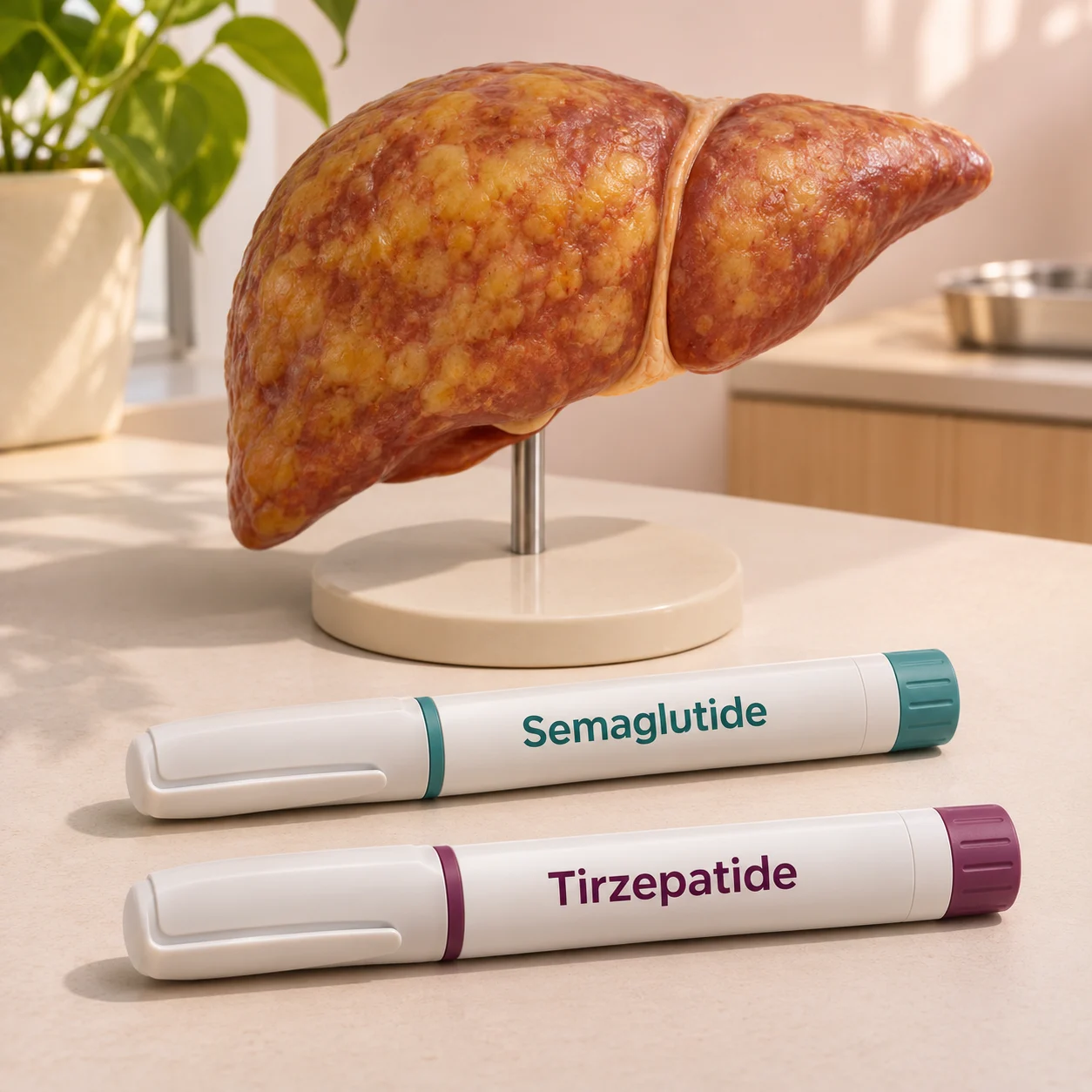
Yes, weight loss injections for fatty liver may help reduce liver fat in eligible patients with obesity or related metabolic conditions. Medicines such as semaglutide and tirzepatide have also shown improvements in liver inflammation in clinical trials. But can these injections improve Grade 2 fatty liver or reverse liver scarring? Results depend on your liver condition, weight reduction and treatment response. This guide explains the research, fatty liver grades, tests and treatment options.
Diagnosed With Fatty Liver and Struggling With Weight? Understand your metabolic health and explore medically supervised weight management options at MOH Clinics.
Book a Weight Loss ConsultationFatty liver develops when excess fat accumulates inside liver cells. Doctors now use the term metabolic dysfunction-associated steatotic liver disease (MASLD) when liver fat occurs alongside certain metabolic risk factors.
Common risk factors include obesity, type 2 diabetes, insulin resistance, high cholesterol and high blood pressure. Some patients develop metabolic dysfunction-associated steatohepatitis (MASH), which involves liver inflammation and injury. Over time, MASH can lead to fibrosis, or liver scarring. Advanced fibrosis increases the risk of cirrhosis.
Many patients have no symptoms, making medical assessment important even when they feel healthy.
Patients often receive an ultrasound report mentioning Grade 1, Grade 2 or Grade 3 fatty liver. These grades describe the amount of visible fat-related change, not the severity of liver scarring.
| Fatty liver grade | Meaning | Treatment considerations |
|---|---|---|
| Grade 1 | Mild fatty changes | Lifestyle changes and metabolic assessment |
| Grade 2 | Moderate fatty changes | Weight management and fibrosis risk evaluation |
| Grade 3 | Marked fatty changes | Further evaluation for liver injury and fibrosis |
Weight loss injections for fatty liver may support improvement at different grades when patients meet medical eligibility criteria.
For example, someone with Grade 2 fatty liver and obesity may benefit from structured weight management. Yet ultrasound grade alone cannot determine whether injections are appropriate.
A person with Grade 3 fatty liver does not automatically have advanced fibrosis.
Clinical studies suggest that GLP-1 injections for fatty liver may benefit selected patients, particularly those with MASH.
Semaglutide is the active ingredient in Wegovy and Ozempic.
The ESSENCE trial studied semaglutide 2.4 mg in patients with MASH and moderate to advanced fibrosis.
After 72 weeks, researchers reported:
| Clinical outcome | Semaglutide | Placebo |
|---|---|---|
| MASH resolution without worsening fibrosis | 62.9% | 34.3% |
| Fibrosis improvement without worsening MASH | 36.8% | 22.4% |
These findings show that improvements in liver inflammation and fibrosis are possible, although they are not guaranteed. The US FDA approved Wegovy for certain adults with non-cirrhotic MASH and F2–F3 fibrosis in August 2025.
In India, a CDSCO expert committee recommended conditional approval for this additional indication in April 2026. A committee recommendation does not itself confirm final marketing authorisation. Patients considering Wegovy Injection in Mumbai should confirm the applicable Indian prescribing indication with their doctor.
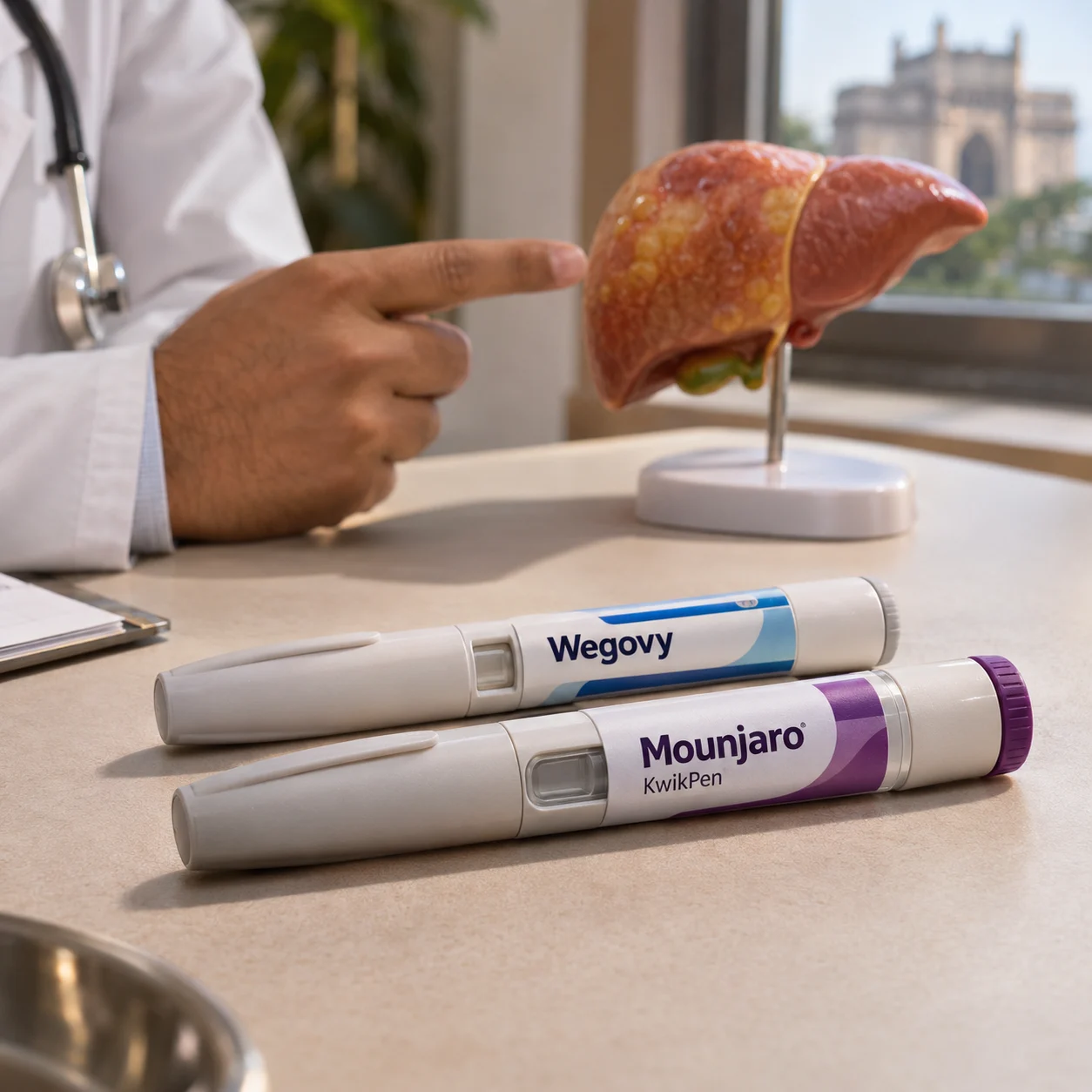
Mounjaro contains tirzepatide, which acts on GIP and GLP-1 receptors.
The SYNERGY-NASH trial studied 190 patients with MASH and moderate or severe fibrosis.
After 52 weeks, MASH resolved without worsening fibrosis in 44–62% of tirzepatide-treated patients, compared with 10% receiving placebo.
These findings are promising, but the studies cannot establish whether tirzepatide is better than semaglutide for liver disease. Learn more about Mounjaro Injection in Mumbai and medically supervised obesity treatment.
Weight reduction remains an important part of MASLD treatment for patients with excess weight.
International clinical guidelines suggest these sustained weight loss targets:
| Weight reduction | Potential benefit |
|---|---|
| 5% or more | Reduced liver fat |
| 7–10% | Improved liver inflammation |
| 10% or more | Greater potential for fibrosis improvement |
For example, a person weighing 90 kg who loses 9 kg achieves 10% weight reduction.
These percentages are treatment goals, not guaranteed results.
Balanced nutrition, regular exercise and metabolic health management remain important whether or not medication is prescribed.
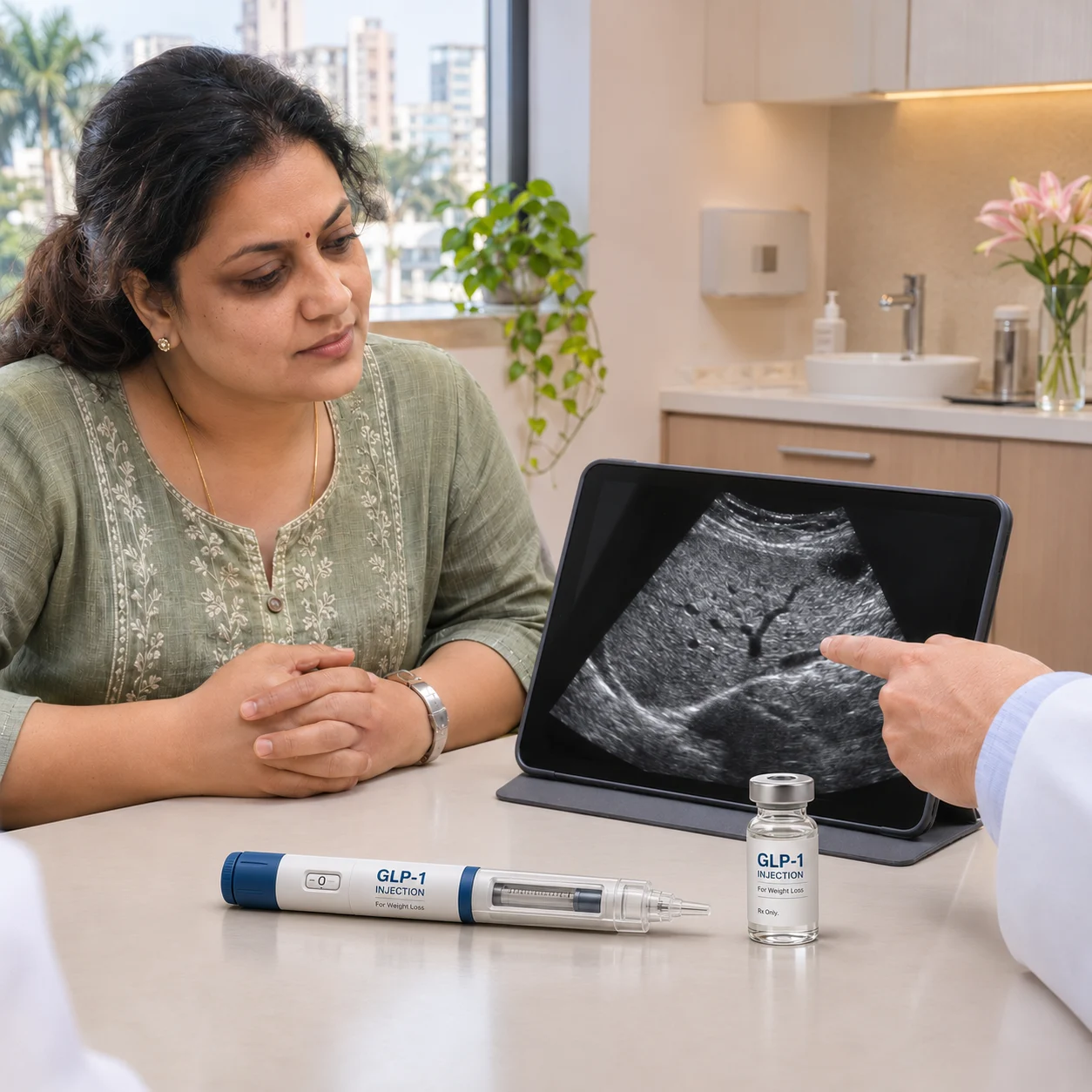
Before recommending weight loss injections for fatty liver, doctors assess metabolic health and the risk of advanced liver disease.
| Test | What it helps assess |
|---|---|
| Liver function tests | Liver enzymes and related markers |
| HbA1c | Blood sugar control |
| Lipid profile | Cholesterol and triglycerides |
| FIB-4 | Risk of advanced liver fibrosis |
| FibroScan | Liver stiffness and fat assessment |
| Ultrasound | Fatty liver changes |
FIB-4 uses age, liver enzyme levels and platelet count. Doctors may recommend FibroScan when initial results suggest increased fibrosis risk.
Normal liver enzymes do not rule out significant liver scarring. Patients with suspected advanced disease may need specialist liver care.
Doctors may consider weight loss injections for fatty liver when patients also meet approved treatment criteria for obesity or another relevant condition.
Eligibility depends on BMI, medical history, metabolic health and medication-specific indications.
Common side effects include nausea, vomiting, constipation and diarrhoea. More serious complications can occur. These medicines are not suitable for everyone, including certain patients with specific contraindications or pregnancy-related concerns. Medical supervision helps balance possible benefits against treatment risks.
If you have fatty liver and struggle with excess weight, identifying your metabolic risk factors is an important first step.
At MOH Clinics Mumbai, patients can receive individualised medical weight management assessments, nutritional guidance and follow-up support. As a weight loss clinic in Mumbai, MOH Clinics helps eligible patients explore treatments such as Wegovy and Mounjaro. Learn more about Weight Loss Injections in Mumbai and your consultation options.
Weight loss injections for fatty liver may help eligible patients reduce liver fat and improve metabolic health. Research on semaglutide and tirzepatide shows encouraging outcomes, but treatment must match your medical needs. Nutrition, physical activity and appropriate liver monitoring remain essential. Consult a qualified doctor to understand your condition and take practical steps towards better long-term liver health.
Speak with our medical specialists at MOH Clinics in Mumbai for a personalized evaluation, expert guidance on GLP-1 therapies, customized nutrition planning, and dedicated ongoing care.
Book Consultation